Footloose Forays

Footloose Forays is a small travel business begun in 1983 while I was still in graduate school at San Francisco State University. It has grown slowly and organically through the intervening years. I have taken over 10,000 people on various natural history outings ranging from 4-hour night hikes on Mt. Tam to three week adventures in Ecuador. I have enjoyed nearly every minute of this work. The Buddhists refer to the importance of right livelihood and I have been lucky enough to find that. I lead every single trip. Footloose Forays = Michael Ellis. I have no staff except when I enlist my lovely son to help me. I have a very high repeat business and most trips fill up way in advance. One of the many blessings is the lovely relationships that I have with my fellow naturalists all over the world.

Currently I am concentrating on international travel and only offer a few of my favorite Footloose Forays trips in this country, mostly week-long camping in the mountains or deserts. If any of these trips interest you please feel free to contact me.

In addition to my own natural history forays, I often lead trips for a number of Bay Area organizations. I have a BS in Botany and Masters in Marine Biology. Though I firmly believe that formal schooling is only a small part of the educational process. I have been a regular contributor to the KQED-FM Perspective Series since 1988 and write the Ask the Naturalist column for Bay Nature Magazine.

Latest News


Sprung Spring


April, 2013

April flowers

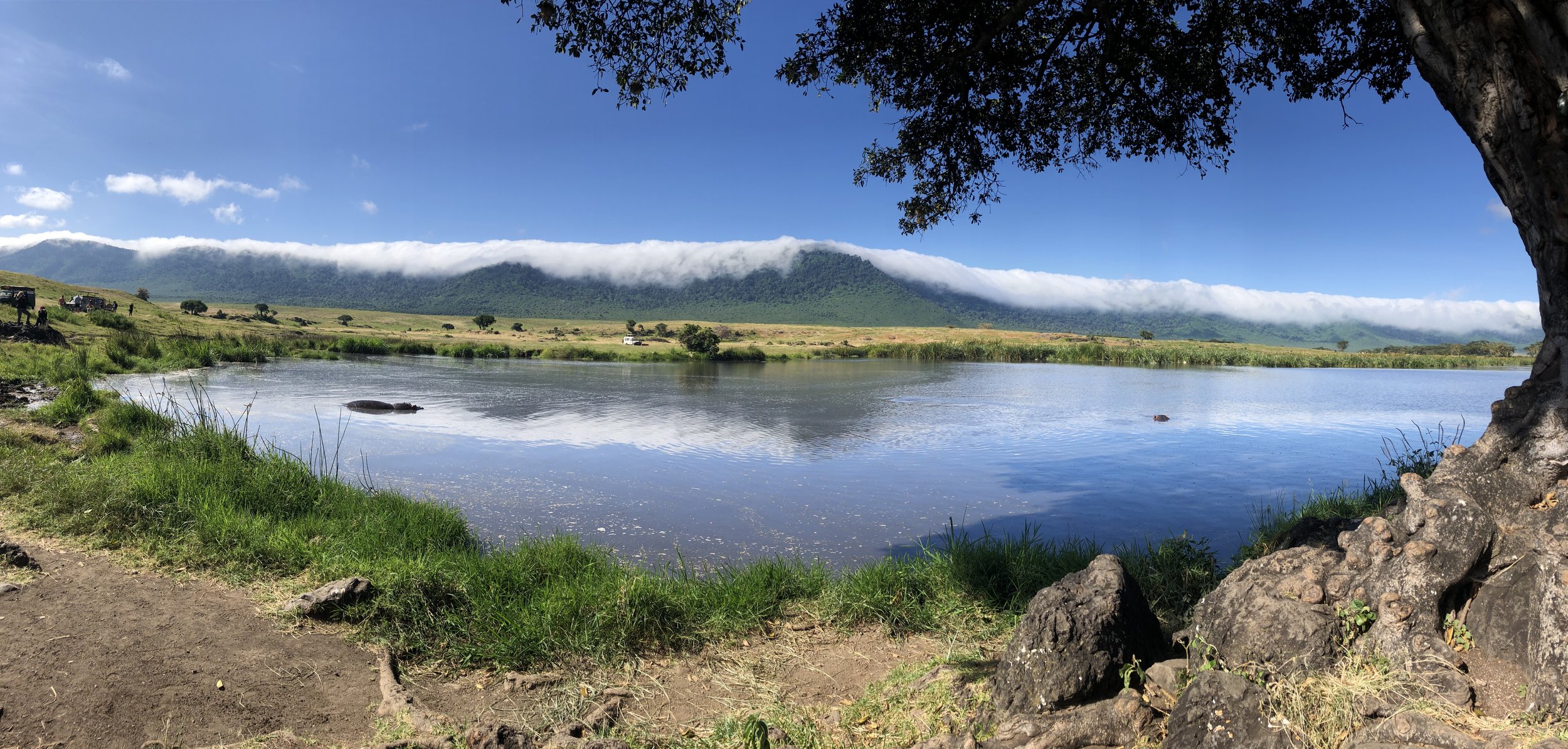
It is been a very busy 2013. It started in January with 3 weeks in Ecuador, the Galapagos Islands and the upper Amazon basin. We saw everything! I came back for 4 days and then went to Tanzania for a month. I had two trips back to back. We also saw wonderful sights - several African kills, mating lions, a fierce warthog mama defending her piglits against the cheetah and we had a full moon in the you Ngoronngoro Crater. In 2014 there are now 3 offerings and all trips are nearly full. There is a good reason for this- I have the perfect itinerary, a competent local company and guides but most importantly my clients are the best.

I was home home for 6 days and then off the Baja California. I chartered a boat called the Searcher, from San Diego  and we headed south. My co-leader was dear my friend Armando Quintero. Our 1st stop was  San Ignacio Lagoon where we had the distinct pleasure of  petting gray whales -  mothers and babies. There is really nothing like this on the planet Earth. Huge cetaceans come up to your panga and allow this intra-specific action to occur. It is a real mystery and soul stirring. We continued around Cabo San Lucas watching blue whales, humpback whales Byde's whales, thousands of dolphins and hundreds of mobula rays. Exploring remote islands, swimming with sea lions, snorkeling in crystal-clear water coupled with many onshore hiking adventures including finding the world's only rattleless rattlesnake on Isla Santa Catalina.

Then it was home for a week and off to the Mojave Desert. This is the place I go for my souls respite. Although the flowers were not spectacular this year we did have some fantastic sightings. The weather was almost perfect as well, we only had one or 2 days of wind. In the daytime temperatures were quite nice. We hula hooped at Badwater to the music of Sarah Vaugn singing Fever. There was a special event at the Amergosa Opera by 2 mimes from the Cirque du Soleil. 

Now I have a short period of time before I'm heading off to Turkey for a month. The 1st trip explores Eastern Turkey and the 2nd one is my normal turquoise Coast adventure. There is still a little room on both trips but you need to hurry.

This summer I am taking a private trip to Bhutan. I'm looking forward to seeing this Buddhist country at another time of year. The Lakes basin and the Great Basin National Park trip–the camping trips this summer–both still have a little room. In October into November there's still some room on the 1st Palau but the 2nd is waitlist only.

I'm so enjoying being home in this glorious spring weather. The winds have been a little intense but  will fuel the marine ecosystem via upwelling of deep ocean water to the surface. This provides food for millions of animals.

Here is my latest perspective, which was recently aired on KQED, 


                                                                         Coyotes

By Michael Ellis

The coyote figures in many Native American myths as the creator, the fool, the transformer and the prankster. In fact the word–coyote–is an Aztec word which means - trickster.

Well they certainly have tricked their way into 49 states, throughout Canada and all the way south to Panama. Coyotes are by far the most successful large carnivore in North America.  And since the gray wolf has been extirpated throughout the Eastern United States the coyote moved in from the West and now thrives in places it never did before. One even showed up in Central Park in New York City several years ago. And our own Golden Gate Park has resident coyotes. We are talking adaptable and flexible.

Coyotes have greatly extended their range and increased in numbers because they can exploit edge habitat. That is open grass or brush next to wooded areas, plenty of cover and food nearby– hmm sounds like the Suburbs! Essentially we have modified the wild environment to perfectly suit coyotes, whereas other large predators like mountain lions and wolves have decreased in population.

Coyotes usually hunt in pairs and it is true that in urban areas coyotes will take domestic cats and small dogs.  They are extremely flexible in their diet and nearly everything is considered food from garbage and carrion to deer and birds. During the late summer and early fall they eat a lot of berries as well.

Coyotes originally evolved in the Great Plains of North America during the Pleistocene era, 1.8 million years ago, relatively recently. They are so closely related to both the gray wolf and the domestic dog that they can hybridize easily with both. There are coy-dogs and coy-wolfs, rare but it happens.

The breeding season is limited to the early spring when 6 pups are born. Both male and female help provision the young and occasionally the offspring from the previous years stick around to help as well.

Hate em or love em, coyotes are here to stay. Oh and by the way, they have never been known to actively hunt roadrunners. Beep beep. This is Michael Ellis with a Perspective.


Michael (far left) and friends overlooking the Ngorongoro Crater in February 2009. I have spent every February since 1993 in Tanzania. The adventure in the Serengeti remains one of my favorite Footloose Forays trips.

More Photos »


We will send you occasional emails about trip updates. We hate spam, and your email address will never be used for other purposes.


This is the only commercial link on my website. If you purchase a product from Eagle Optics through this link, I receive 5%. I will then donate that money to the non-profit organization of your choice.